

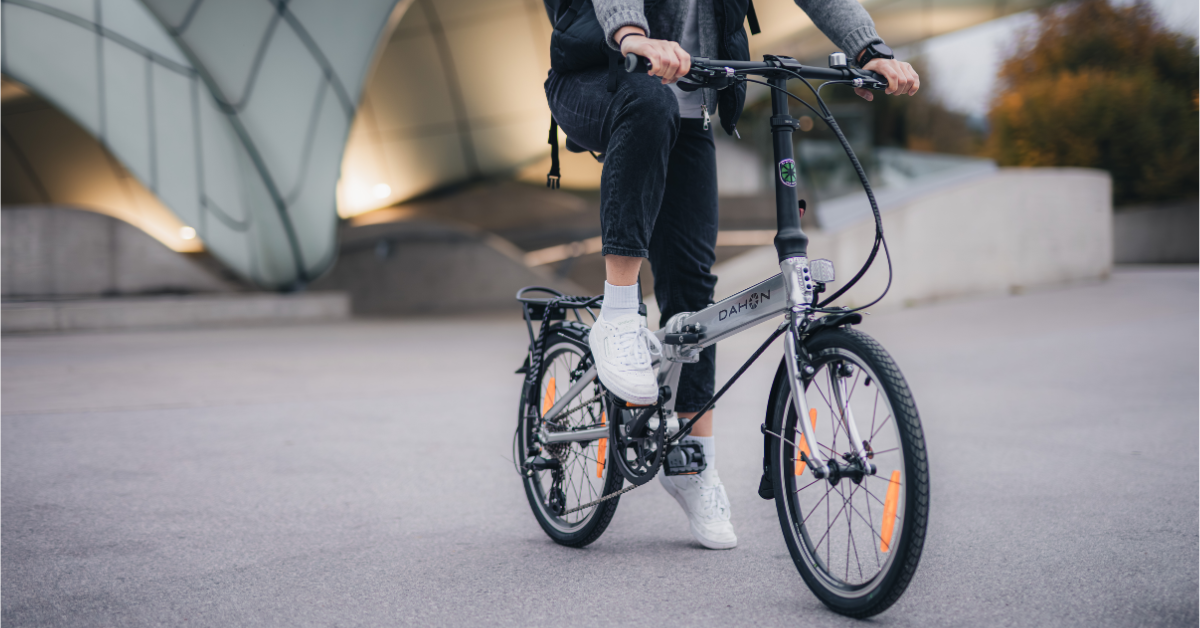
Switching to a folding bike feels harder at first. That feeling is real, not in your head. But "harder to pedal" actually comes from three completely different sources, different fixes. Once you know which one is affecting your ride, you'll find that the gap is smaller than you expected, and much of it is correctable.
Three Real Reasons a Folding Bike Can Feel Harder
Lumping these three factors together leads to the wrong diagnosis and the wrong fix. They are separate and work differently.
1. Wheel Size
Most folding bikes run on 20-inch wheels. Smaller wheels complete more rotations per mile than larger ones, which usually means a slightly higher pedaling cadence at the same speed. That part is true.
At typical city speeds of 10 to 15 mph (16 to 24 km/h), the pedaling effort difference from wheel size alone is relatively modest. It's noticeable, but it's not the reason you come home from a short ride feeling drained.
2. Gear Ratio
This is the factor most responsible for the "my folding bike is exhausting," and it has nothing to do with wheel size.
A folding bike with a narrow gear range has no easy gear to drop into on hills or from a dead stop. You push harder because there is no other option. That is a drivetrain problem. A folding bike with a wide gear range (8 speeds or more, with a cassette top cog of 28T or larger) can cover the same terrain as a standard hybrid bike with comparable effort.
3. Total Weight
Folding bikes typically run 2 to 7 lbs (1 to 3 kg) heavier than a comparable lightweight road or fitness bike. You notice this most on climbs and accelerating from a stop. On flat ground at a steady cruising pace, the weight difference is usually less noticeable.
Knowing which of these three factors is actually affecting your ride points you toward the right fix. The sections below go through each one.

Folding Bike vs Regular Bike: How Big Is the Efficiency Gap, Really?
This is an honest comparison: no overpromising, no dismissing real differences.
Flat Cruising (10 to 15 mph / 16 to 24 km/h)
The bike efficiency comparison on flat ground often comes down to slightly higher rolling resistance from smaller tires. At the same speed, your heart rate will run slightly higher than on a larger-wheeled bike. For most riders, the gap is small and the body adapts within a few weeks until the difference stops registering.
Hill Climbing
This is where gear ratio matters most in the folding bike vs regular bike comparison. A folding bike with a narrow gear range will noticeably struggle on grades above 5%. A folding bike with a wide-range cassette (such as 11 to 32T) performs very close to a standard hybrid on the same climb. The hill difficulty is a spec issue, not a folding bike category issue.
Starting From a Stop
This is where many riders are surprised. Smaller wheels generally have lower rotational inertia, which can help them spin up faster from a stop. In city riding with frequent stops at lights and intersections, a folding bike's quicker acceleration is a genuine practical advantage over larger-wheeled bikes.
Folding bikes are not slower bikes. They are bikes with different strengths. For stop-and-go city riding, a folding bike is genuinely competitive. For long sustained efforts at high speed on open roads, larger-wheeled bikes hold the advantage.
How to Reduce the Effort of Riding a Folding Bike: 4 Fixes
These four adjustments produce the biggest real-world results, and many riders overlook all four.
Fix 1: Tire Pressure
This is the single highest-impact adjustment, and one of the easiest to miss.
Every 20-inch folding bike tire has a recommended pressure range printed on the sidewall. Check it and use it as your target. Many riders run their tires well below that range because the tire already feels firm to the hand at lower pressure. Underinflated tires increase rolling resistance considerably. Riding well below the recommended range is one of the most common hidden causes of a folding bike feeling harder to pedal than it should. If you have not checked your tire pressure recently, start there.
For folding bike tire pressure for speed on smooth pavement, staying toward the upper end of your tire's recommended range makes a consistent, noticeable difference.
Fix 2: Saddle Height
A saddle set too low is a common efficiency problem. When the pedal reaches its lowest point, your knee should have a slight bend of roughly 25 to 35 degrees. Any more than that and your legs cannot fully extend through the stroke. You lose power on every pedal turn.
Folding bikes have a wide seatpost adjustment range, and many riders set it once and never revisit it. It is worth checking.
Fix 3: Cadence
Folding bike cadence tips consistently point in the same direction: spin faster, push less hard.
The target cadence on a 20-inch folding bike is slightly higher than on a larger-wheeled bike:
-
Folding bike target: 80 to 90 RPM
-
Standard bike typical range: 70 to 80 RPM
A common mistake is pushing a high gear at a slow cadence. Dropping to a lighter gear and spinning faster takes stress off your legs and keeps your speed up. It takes a couple of weeks to build the habit, but the feel of the bike shifts noticeably once it clicks.
Fix 4: Shift Earlier
Shift down before you feel resistance, not after. On any approaching grade, drop into your lower gears while you still have momentum. Pre-shifting is a simple habit with a solid return on every ride.

Does Gear Range Make or Break a Folding Bike's Riding Feel?
Yes, it is the factor that most directly determines whether pedaling difficulty on a folding bike feels manageable or frustrating. Here is what to look for when choosing a bike:
| Gear Count | Best For | Limitation |
|---|---|---|
| 6 speeds or fewer | Flat urban commuting only | Hills and headwinds require noticeably more effort |
| 8 speeds (11–32T cassette) | Mixed city terrain | Covers most everyday riding well |
| 10 to 11 speeds | Varied terrain, longer rides | Often provides a riding feel closer to a standard hybrid or sport bike for many urban riders |
For riders who want the effort gap to close as much as possible, 10 or 11 speeds with a wide-range cassette is the most direct path there.
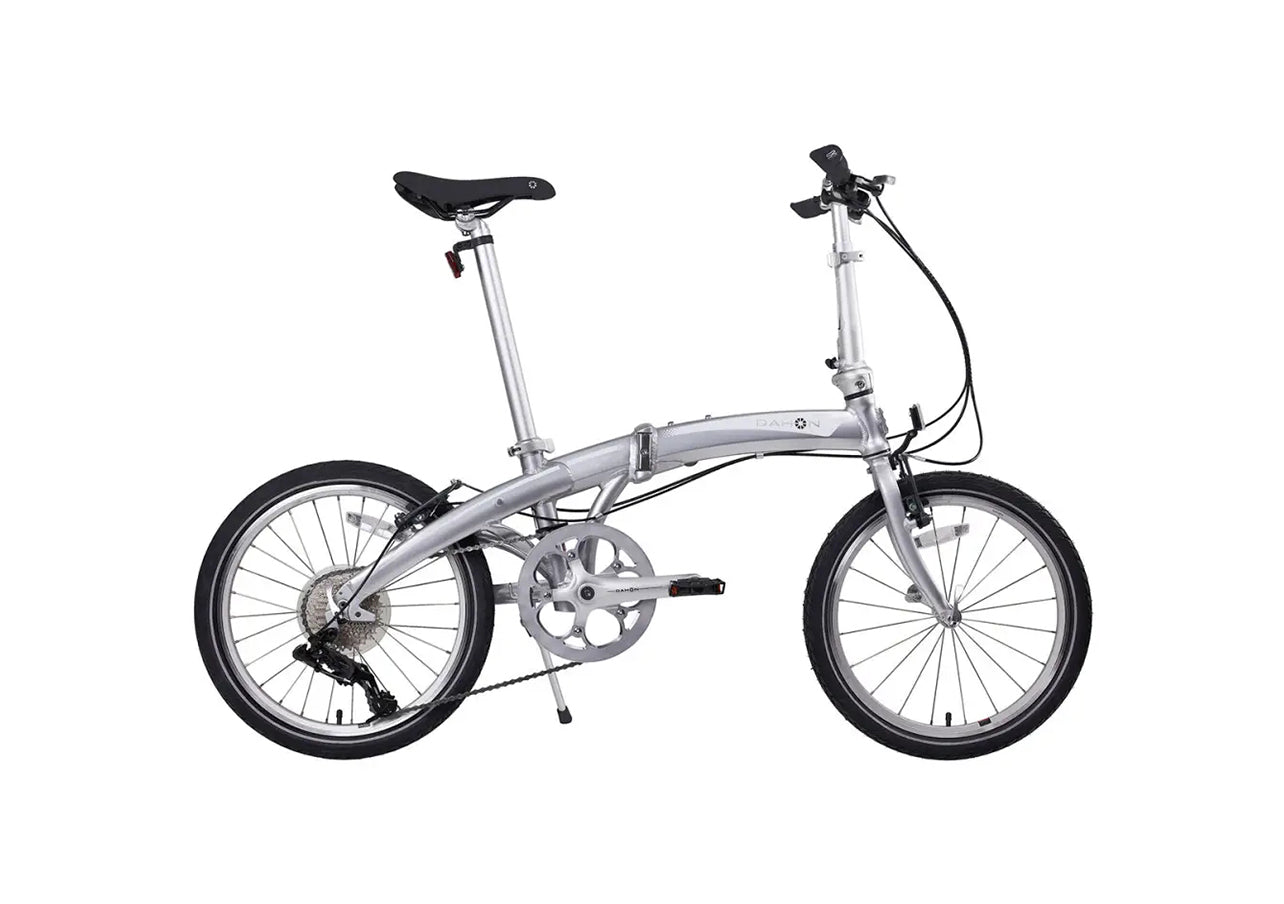
DAHON's MU D10 and MU D11 are designed around exactly this approach. Their 10- and 11-speed wide-range drivetrains address the gear-ratio gap that makes lower-spec folding bikes feel laborious on real terrain. The DELTECH cable system increases overall frame rigidity and reduces flex, which translates to better power transfer and a more responsive feel when pedaling hard. Riders who switch to these models from 6- or 7-speed folding bikes often find the pedaling effort much closer to what they'd expect from a standard sport bike.
The Adaptation Curve: What to Expect in Your First Month
The adaptation period is real, and knowing what to expect makes it easier to stay with it.
Weeks 1 to 2: The pedaling rhythm feels different from a larger-wheeled bike, especially the higher cadence. Some riders find the faster turnover rate mildly tiring until the muscle pattern becomes familiar.
Weeks 3 to 4: Muscle memory builds. Many riders notice the effort feeling lower than it did in the first week, even without any technical adjustments.
After one month: Many urban riders find that the difference between riding a folding bike and a regular bike has become minor to unnoticeable on their daily routes.
Who adapts faster:
-
Riders who already naturally pedal at a higher cadence
-
Riders whose primary routes are flat city streets
Who takes a bit longer:
-
Riders transitioning from large-wheeled touring or road bikes
-
Riders who climb steep grades daily
Choosing a DAHON folding bike with 8 or more speeds can shorten this adaptation curve. Having a full gear range available means you can always match the resistance to your current energy level, rather than being locked into a fixed effort.
Conclusion
The pedaling difficulty gap between a folding bike and a regular bike is real, but mostly fixable. A large part of that "this feels hard" experience traces back to three correctable factors: underinflated tires, a saddle set too low, and too narrow a gear range. Fix those three things and the riding feel shifts considerably. To start with the gap already minimized, browse DAHON's multi-speed lineup and find the right build for your ride.
Frequently Asked Questions
Q1: Does a Folding Bike Slow You Down Compared to a Regular Bike?
Usually not by much, for most city riding. On flat ground at typical commuting speeds of 10 to 15 mph (16 to 24 km/h), the folding bike speed difference is relatively small, mainly from slightly higher rolling resistance. For stop-and-go urban riding, small wheels actually accelerate faster from a stop because of lower rotational inertia. Many riders find the practical speed difference in everyday use becomes unnoticeable after a few weeks.
Q2: Why Does My Folding Bike Feel Harder to Pedal Than My Old Bike?
Three things cause most of this: tire pressure that is too low, a saddle set too low, or a gear range that does not go low enough for your terrain. Check tire pressure first. Check the recommended range printed on your tire's sidewall and make sure you are hitting it. Running well below that range adds considerable rolling resistance, and that alone accounts for much of the extra effort many riders attribute to the bike itself.
Q3: What Tire Pressure Should I Use on a Folding Bike for Easier Pedaling?
The right starting point is the recommended pressure range printed on your specific tire's sidewall. Tire pressure varies by tire width, construction, and intended use, so the sidewall marking is the most reliable reference. Many riders underinflate without realizing it because the tire feels solid to the touch well below the recommended range. Riding considerably below that range increases rolling resistance and is a common hidden cause of a folding bike feeling harder to pedal than it should. Check pressure every one to two weeks.
Q4: How Fast Can a Folding Bike Go Compared to a Road Bike?
A road bike holds a clear advantage for sustained high-speed riding above 20 mph (32 km/h) over longer distances. In typical city conditions of 10 to 18 mph (16 to 29 km/h), folding bike speed is close to a standard hybrid or commuter bike. The gap is most noticeable on long open-road efforts, not on the kind of daily commutes most folding bike riders are doing.











Share:
Can Folding Bikes Climb Hills? Gearing, Frame, and What Actually Matters
Bike Hinge Maintenance: How to Keep Folding Mechanism Safe and Smooth