

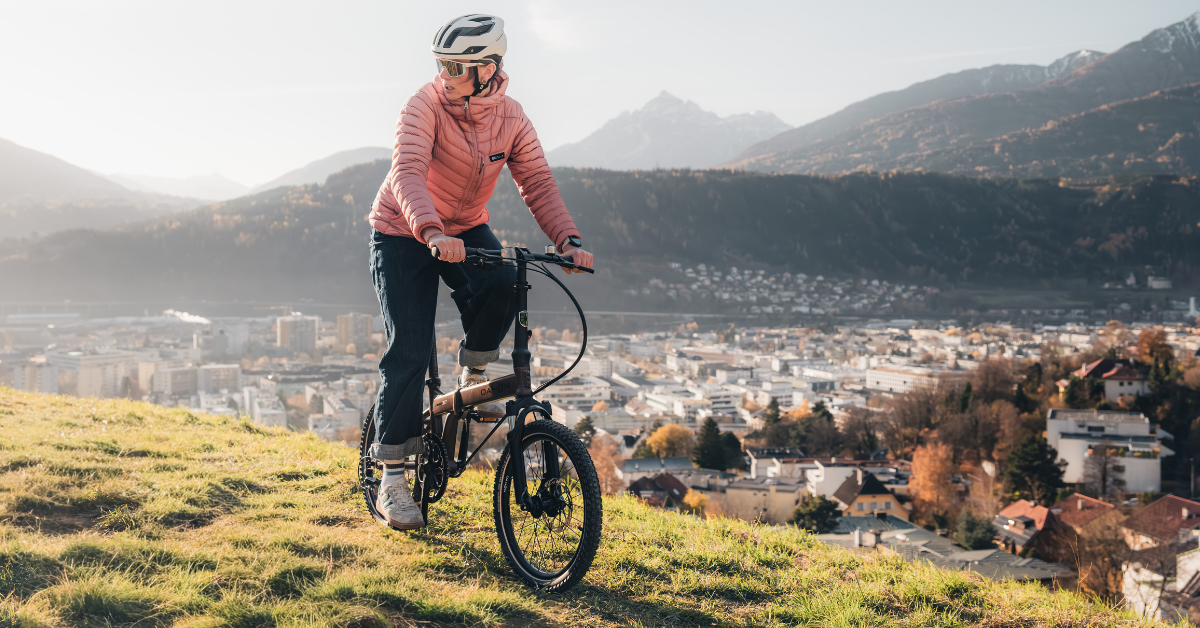
Yes. Folding bikes can climb hills. The real question is whether your folding bike has what it takes for your route. Three factors usually determine that: your gearing system, your riding technique, and how stiff the frame actually is.
The Myth That Folding Bikes Cannot Climb Hills
Early folding bikes were mostly single-speed or low-range 3-speed machines built for flat city blocks. Riders who tackled hills on those bikes remembered the struggle, and the reputation stuck.
Modern folding bikes are quite different from those early models. Speed counts have grown from 3 to 11, cassette ranges have widened, and frame materials have shifted from heavy steel to lightweight alloys.
| Common Myth | Reality |
|---|---|
| Small wheels can’t handle hills | Wheel size doesn’t determine climbing ability. Gear range does. |
| Folding bikes are too heavy for hills | Moderm aluminum folding bikes start around 20 1bs (9 kg). lighter than many full-size bikes |
| Fewer gears means can’t climb | An 8-speed with a 32T rear cog covers most city grades without issue |
How Gearing Determines Your Folding Bike's Climbing Ability
The number that actually predicts hill performance is gear inches, a single figure that combines your chainring size, cassette size, and wheel diameter into a comparable measurement.
Formula: (Chainring teeth ÷ Rear cog teeth) × Wheel diameter in inches
| Gear Inch Range | Best For |
|---|---|
| 3045 gear inches | Hill climbing |
| 55-75 gear inches | Flat-ground ruising |
What Your Speed Count Gets You
| Drivetrain | Typical Max Rear Cog | Climbing Ability |
|---|---|---|
| 6-speed | ~24T | Light grades only |
| 8-speed (e.g. 11T-32T) | 32T | Moderate grades comfortably |
| 10/11-speed | 32T+ | Most city terrain, including steep climbs |
Quick shopping check: Find the largest rear cog in the spec sheet. A 28T cog is the minimum for useful climbing. A 32T cog gives you clear headroom. Anything at 24T or below is built for flatter terrain.

Small Wheels on Hills: Disadvantage or Hidden Advantage?
Most comparisons stop at one point, and it is true: at the same gear ratio, a 20-inch (508 mm) wheel requires a higher cadence than a 700c wheel to move the same distance.
But two factors consistently get left out.
What Small Wheels Do Well on Climbs
- Lower rotational inertia. Smaller wheels generally respond faster to pedal input at low speed. When momentum drops on a steep section, that quicker response helps you hold your rhythm instead of stalling.
-
Lower center of gravity. A more compact, lower-slung frame stays more planted on steep grades, especially at the slow speeds that technical climbing demands.
Small wheels can perform well on short, punchy climbs where quick torque response matters more than sustained momentum. On long, gradual grades above 8%, the higher cadence demand becomes a real factor, and that is where a wide cassette range matters most.
Weight, Frame Stiffness, and Power Transfer on Climbs
Weight
Every pound of bike gets amplified on a grade. Aluminum frames typically run 1–2 lbs (0.5–1 kg) lighter than comparable steel, and while that might sound small, shedding overall bike weight definitely helps conserve energy on longer, sustained climbs.
Frame Stiffness
Every pedal stroke transfers energy into the frame before it reaches the rear wheel. A frame that flexes at the hinge or main tube absorbs some of that energy as structural movement instead of forward motion. The result is a vague, inefficient feeling under load, exactly the sensation people describe when they say a folding bike "feels weak on hills."
This is why frame construction matters more on climbs than on flat ground. A well-engineered folding frame uses reinforced hinge geometry or diagonal bracing to maintain rigidity under pedaling load. When evaluating a folding bike for hilly use, look for an aluminum alloy frame with a locking hinge rated for your rider weight. Flex at the hinge is a red flag. A stiff, locked feel under hard pedaling is what you want.
How to Check If a Folding Bike Can Handle Your Hills Before You Buy
Two numbers on most spec pages will tell you what you need to know.
Number 1: Gear Inches
Formula: (Chainring teeth ÷ Largest rear cog teeth) × Wheel diameter in inches
Example: (38T ÷ 32T) × 20" = 23.75 gear inches, which is typically low enough for a 10% grade for many riders.
Target values by terrain:
- Under 5% grade: ≤45 gear inches
- 5–10% grade: ≤35 gear inches
- Over 10% grade: ≤28 gear inches
Number 2: Largest Rear Cog
Find this number on the spec page:
| Laigest Rear Cog | Good For |
|---|---|
| ≥32T | Steep grades |
| ≥28T | Moderate grades |
| ≤24T | Flat or lightly rolling terrain |
Route reference:
| Your Tenrain | Typical Grade | Taget Lowest Gear |
|---|---|---|
| City flat or gentle rises | Under 5% | ≤45 gear inches |
| Typical commute hills | 5-10% | ≤35 gear inches |
| Steep neighborhood grades | Over 10% | ≤28 gear inches, or consider e-assist |
Both numbers appear on every product spec page.

How to Pick a Folding Bike That Handles Hills, and Tips for Riding Them
Pick by Your Terrain
| Your Hills | Minimum Spec | What to Prioritize | Typical Route Example |
|---|---|---|---|
| Light grades under 5% | 6-7 speed | Total bike weight | Flat city blocks with occasional overpasses |
| Moderate grades 5-10% | 8-speed rear cog≥28T | Gear range | Residential strts, bridge approaches |
| Steep grades over 10% | 10-speed+, or e-assist | Low-end gear ratio roads | San Francisco-style blocks, canyon |
Tips for Climbing
-
Shift before the hill, not on it. Shifting under heavy load strains the drivetrain and often causes a missed shift at the worst moment.
- Stay seated, lean slightly forward. Standing can reduce rear wheel traction on steep grades. Leaning forward keeps weight over the front wheel and prevents it from lifting on sharp pitches.
-
Spin, don't grind. A steady 70–90 rpm in a lower gear is more efficient than forcing a higher one. Your legs last longer.
-
Relax your upper body. It’s natural to grip the handlebars tightly when the climb gets hard, but tensing your arms and shoulders wastes energy. Keep a firm but relaxed grip to let your lower body do the work.
Conclusion
Three things determine whether a folding bike handles hills well: gearing range (8-speed or higher, 28T+ rear cog), frame stiffness, and total weight.
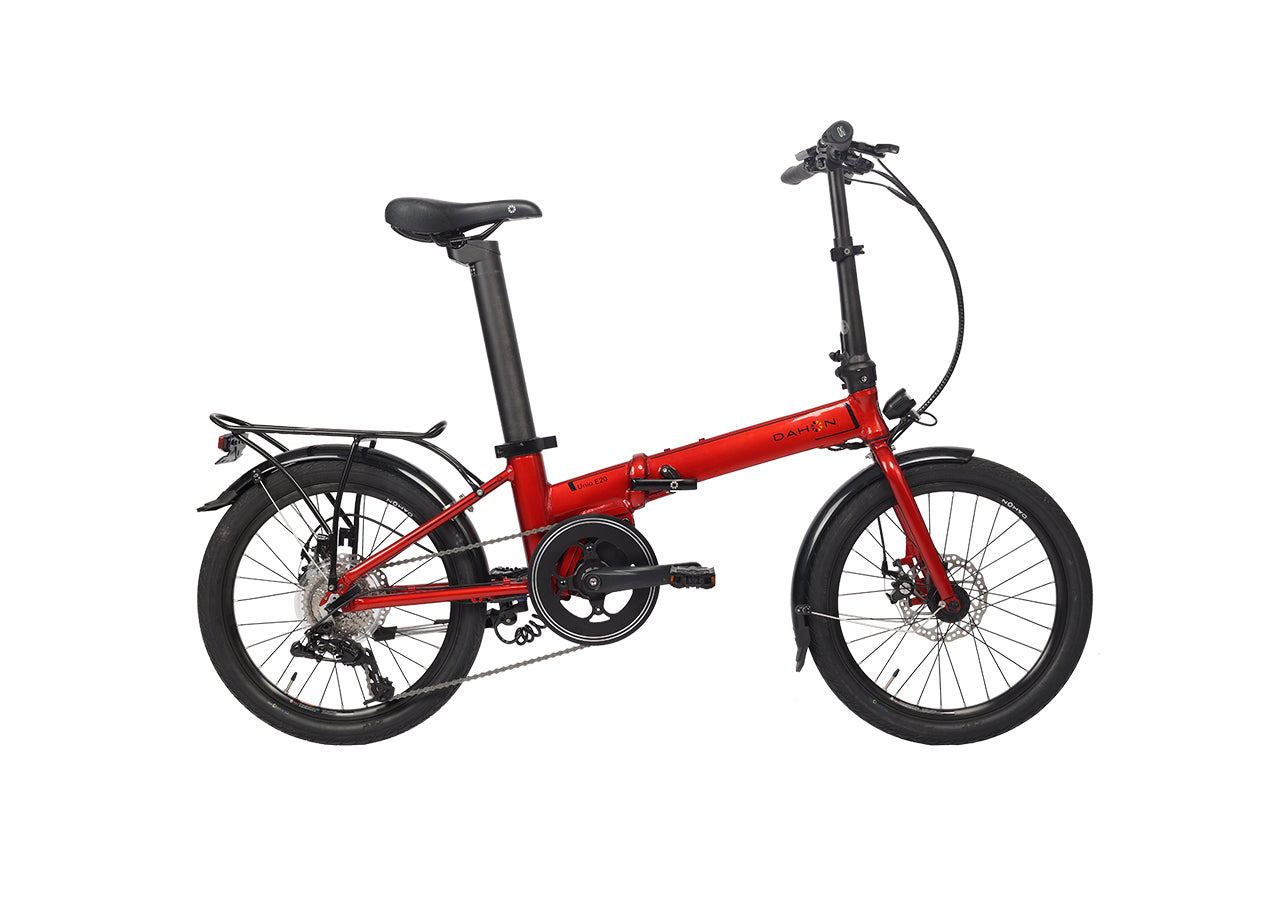
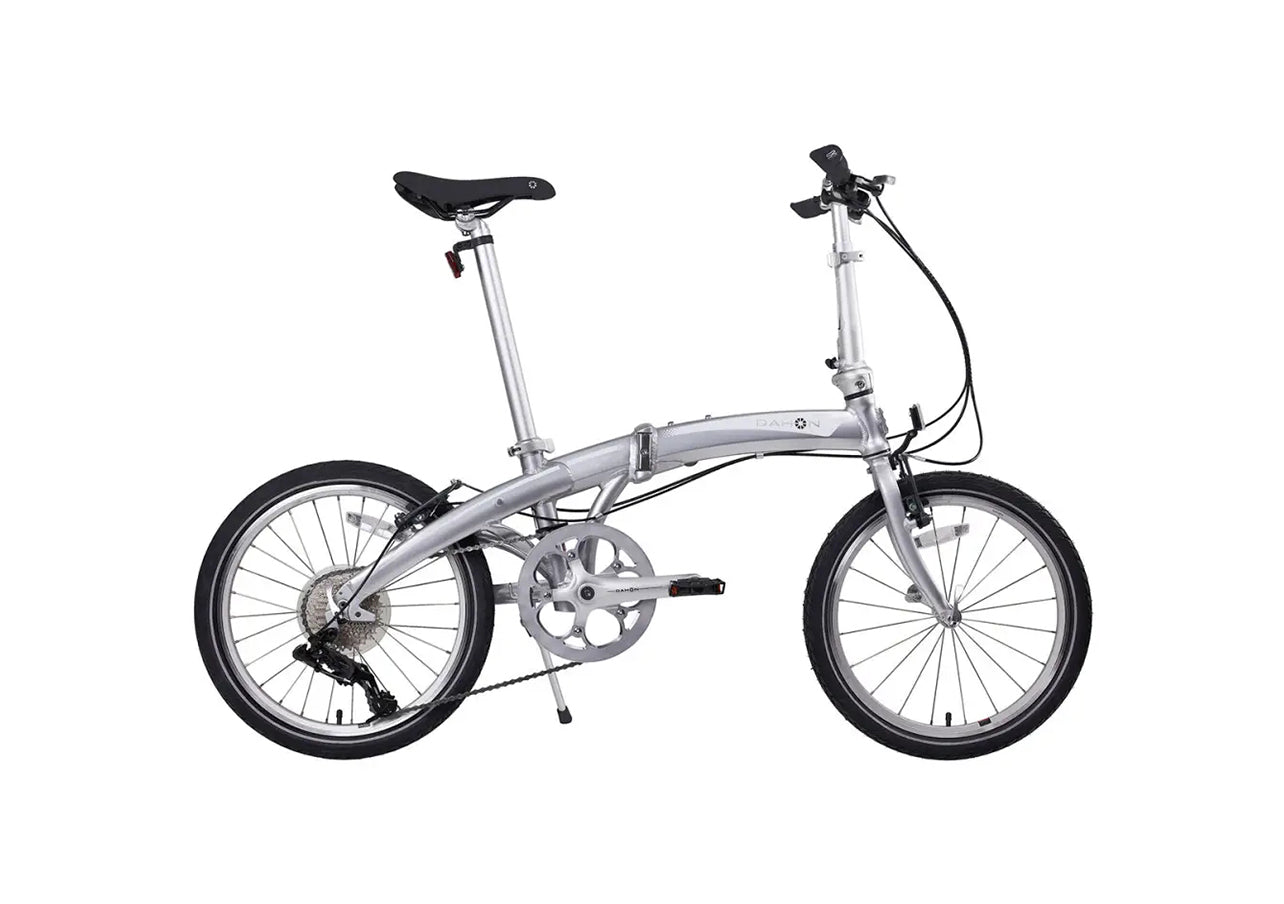
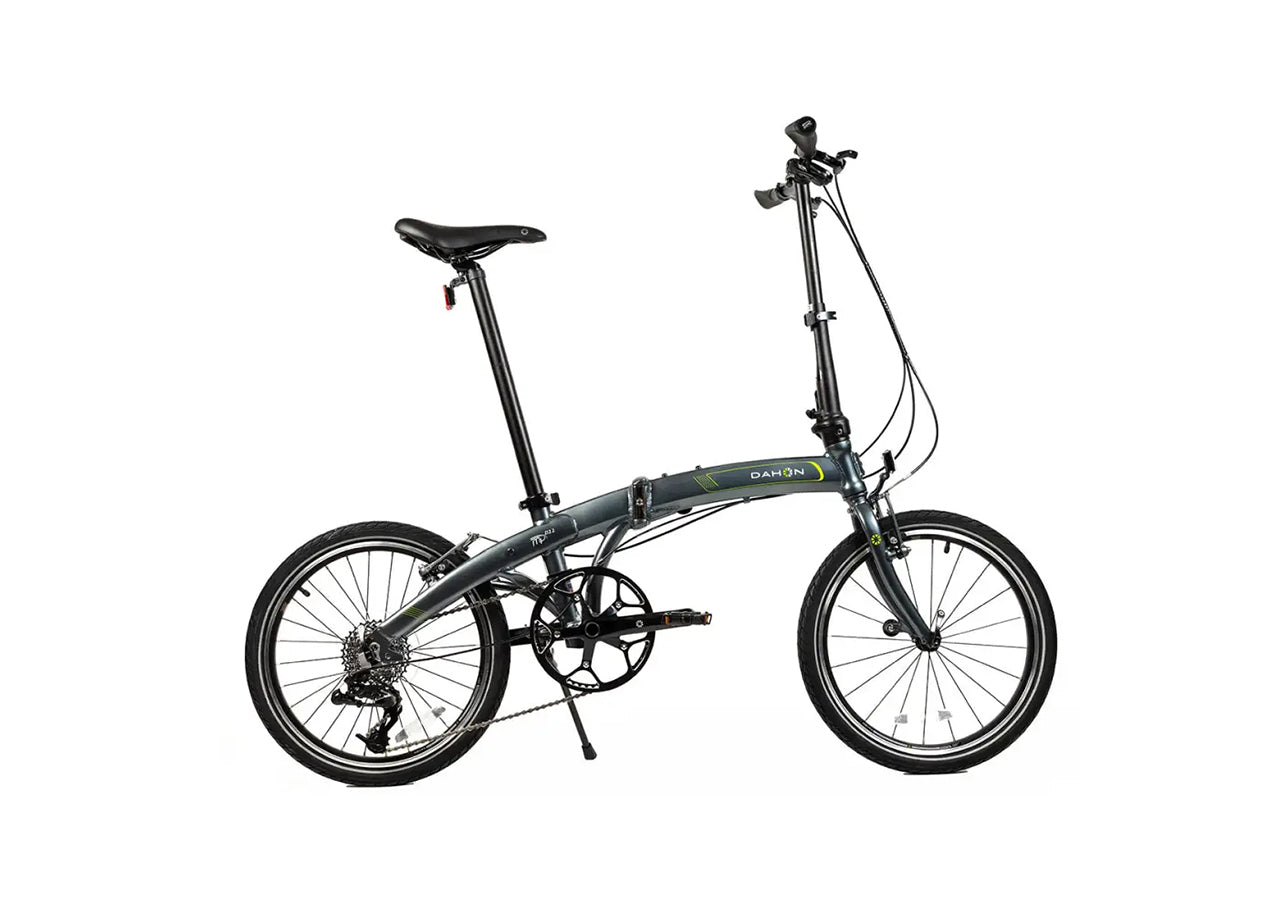
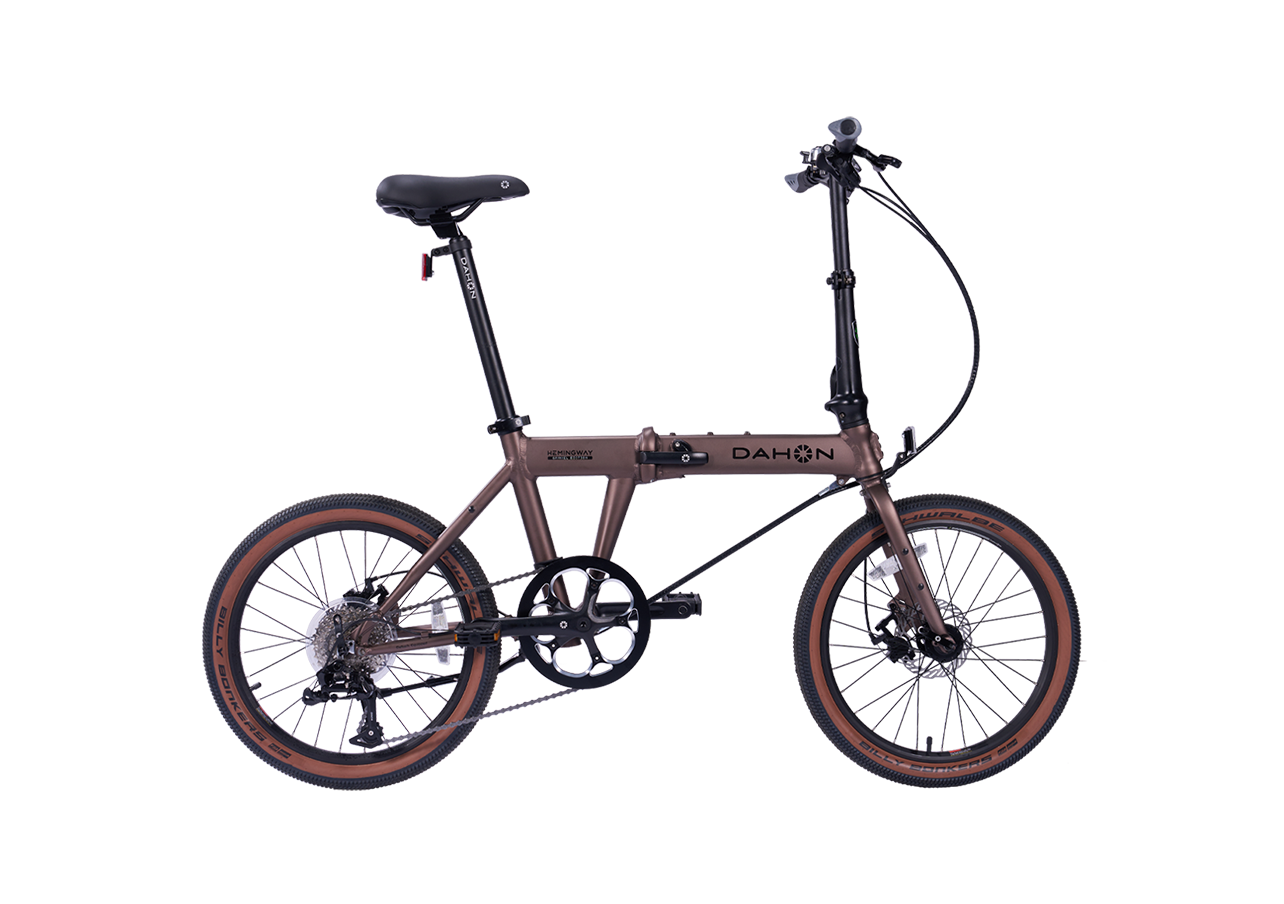
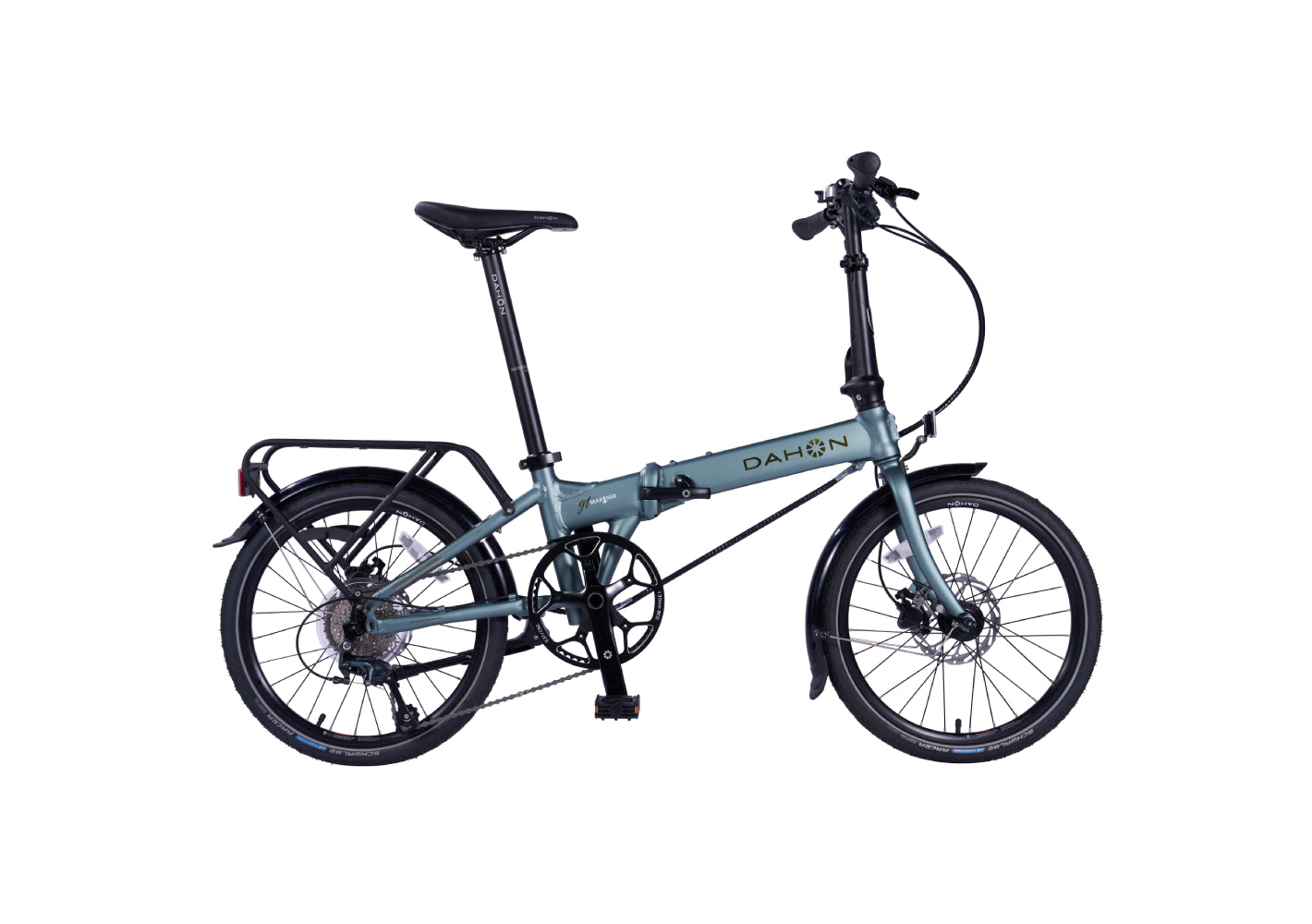
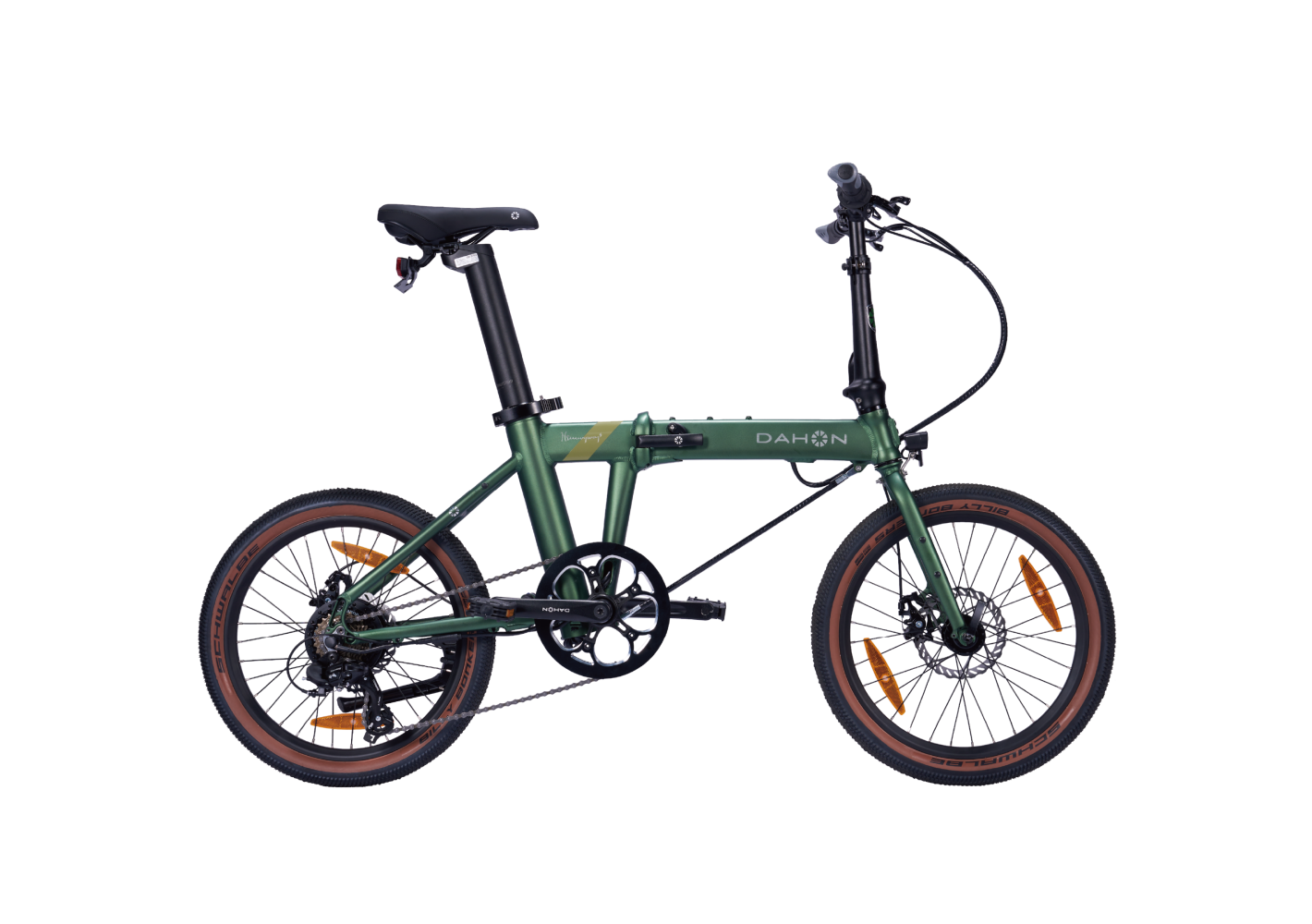
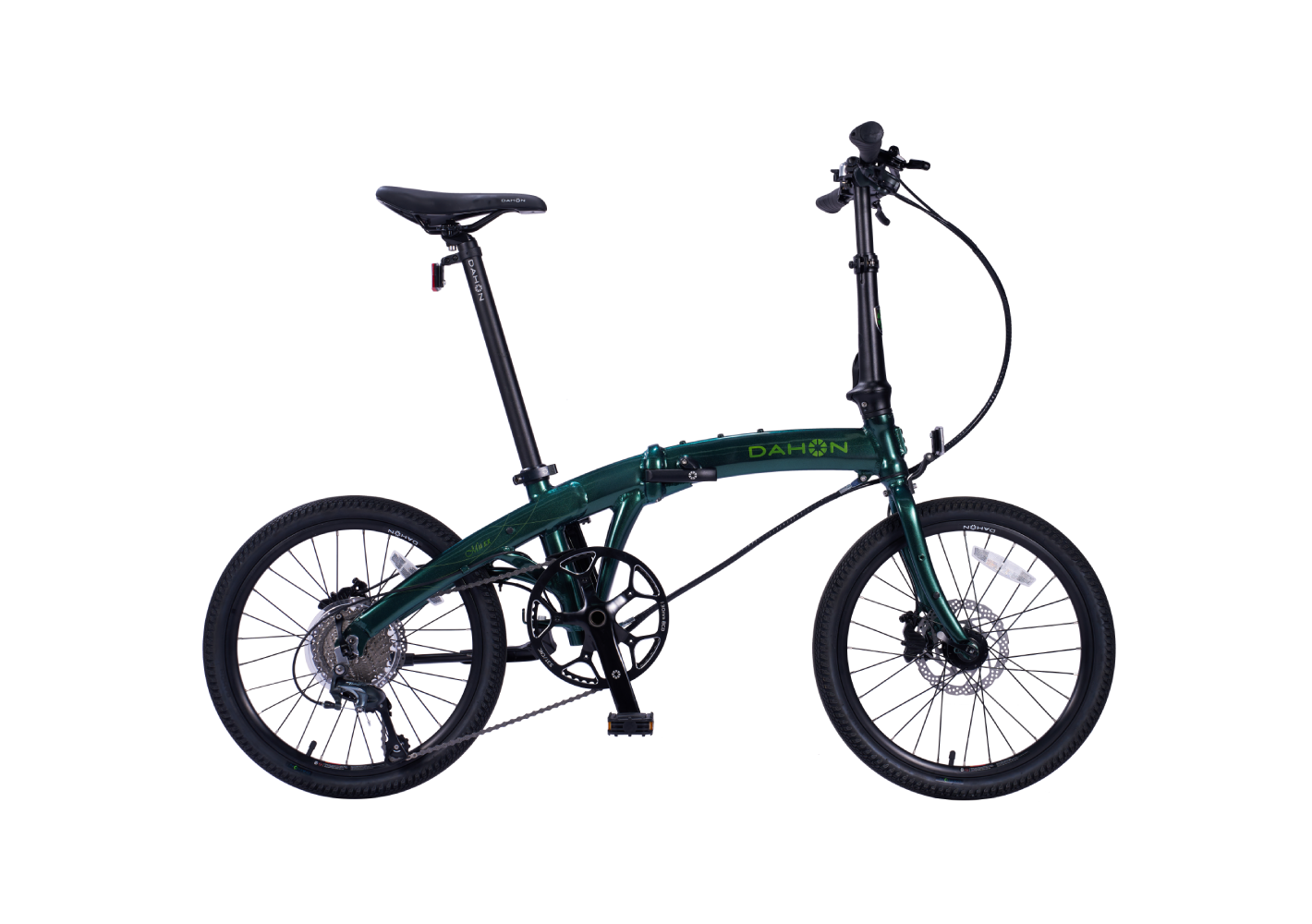
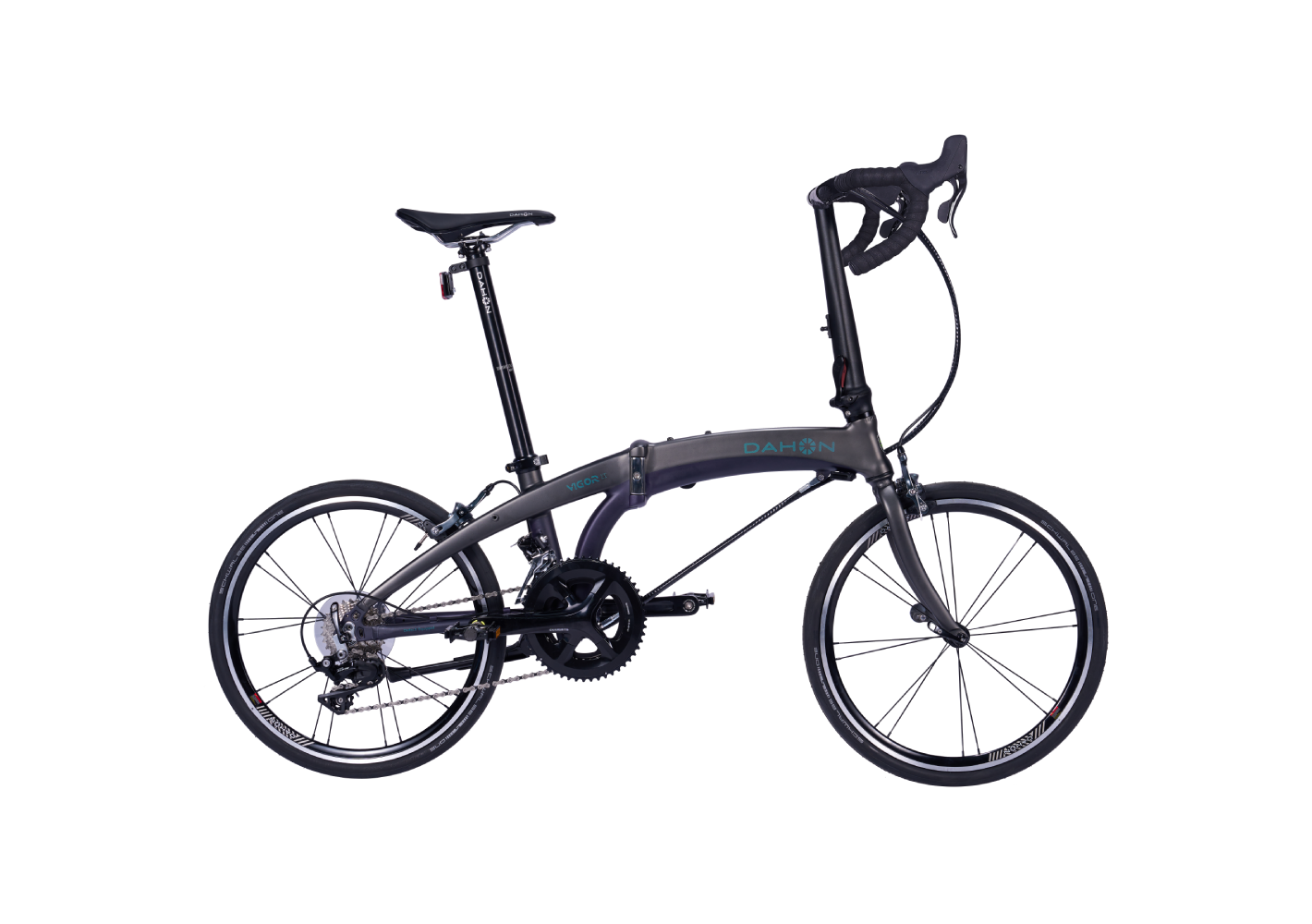
DAHON has spent over 40 years refining folding bike engineering, from wide-range drivetrains to frame systems built for efficient power transfer under load. For moderate city grades, the Mariner D8 offers an 8-speed 11T–32T drivetrain on a lightweight aluminum frame. For steeper or longer climbs, the Mu D10 and Mariner GT run 10-speed Shimano setups with a wider gear spread. If your route regularly tops 10%, the K-Feather e-bike's 250W pedal-assist motor handles the grade for you.
Browse the full lineup at Dahon Folding Bikes to match a model to your route!
Frequently Asked Questions
Q1: Are folding bikes good for hilly areas?
Yes, with the right gearing. A folding bike with 8 speeds or more and a rear cassette reaching 28T or higher handles typical hilly urban terrain without issue. The key variables are gear range and frame stiffness, not the folding mechanism or wheel size. Many riders in hilly cities use multi-speed folding bikes as their primary commuter.
Q2: How many gears do I need on a folding bike for hills?
For moderate grades (5–10%), 8-speed is the practical minimum, with a cassette that reaches at least 28T. For steeper or more sustained climbs, 10-speed or higher gives you the range to maintain a reasonable cadence without overloading your legs. Six-speed setups work for light grades but leave little margin on anything steeper.
Q3: Is it safe to stand on the pedals when climbing on a folding bike?
It is generally safe on a well-built folding bike, but technique matters. Standing can reduce rear wheel traction on steep grades. A more effective approach is to stay seated, lean slightly forward, and use a lower gear to maintain cadence. If you do stand, keep your weight centered and avoid rocking the handlebar side to side, which puts stress on the stem clamp.
Q4: Can a folding bike with small wheels really climb steep hills?
Yes. Small 20-inch (508 mm) wheels have lower rotational inertia, so they respond faster to pedal input at low speeds, exactly the condition you face on a steep grade. Paired with a low enough gear (under 30 gear inches), a 20-inch folding bike climbs steep grades effectively. In many cases, the limiting factor is inadequate gearing rather than just wheel size.











Share:
DAHON Echoes Earth Day with New Lineup at Sea Otter Classic 2026
Is It Harder to Pedal a Folding Bike?